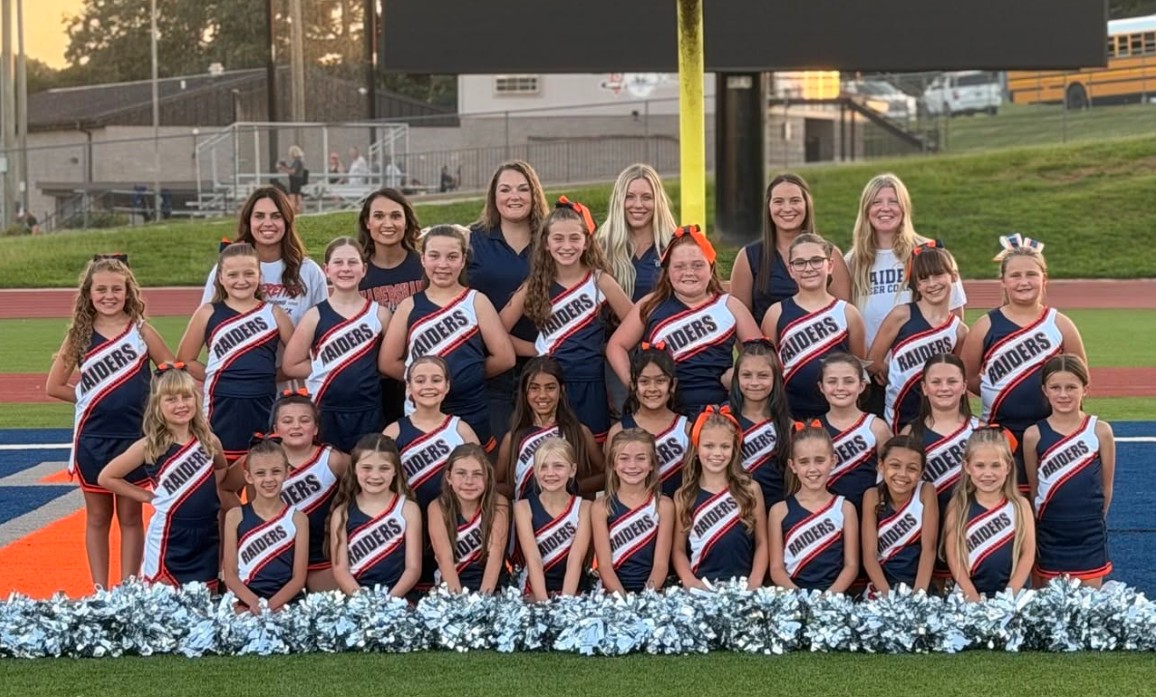
With original choreography, local business support, and four gold medals in two years, one youth cheerleading team offers a compelling reminder that femininity and athletic achievement belong together.
The early 2000s had a peculiar way of defining a successful girl. Television and film frequently celebrated the intelligent, ambitious brunette who rejected conventional popularity while relegating her blonde, cheerleading counterpart to the role of a shallow, mean girl.
Audiences encountered this familiar contrast throughout the decade. Rory Gilmore loved literature and distinguished herself through intellectual ambition. Kat Stratford rejected social expectations in 10 Things I Hate About You, while Gabriella Montez balanced academic achievement with musical talent in High School Musical. Meanwhile, characters such as Quinn Fabray in Glee reinforced the association between blonde beauty and social manipulation.
Of course, Legally Blonde famously challenged the formula. Elle Woods entered Harvard Law School wearing pink, carrying a fashionable handbag, and refusing to abandon the feminine interests that others considered evidence of intellectual inferiority.
Nevertheless, the underlying cultural assumption persisted: Girls who wanted recognition for their intelligence, ambition, or accomplishments often had to distance themselves from traditionally feminine interests.
For cheerleaders, that assumption carried implications well beyond the screen.
Yet, Cheerleading combines strength, flexibility, coordination, endurance, and technical precision with bows, glitter, choreography, and carefully rehearsed smiles. Athletes spend hours mastering physically demanding routines, yet the sport’s feminine presentation has historically made it an easy target for dismissal. These cultural attitudes hold sway in their ability to influence which activities communities finance and recognize as legitimate athletic pursuits.
And in Northeast Georgia, one young cheerleading team has accumulated an impressive competitive record with relatively modest resources.
Four Gold Medals in Two Years
According to Ashley Hatchett, a coach with the Habersham County Recreation Center’s 9U cheerleading team, the young athletes entered the competition division for the first time in 2025, facing established programs with years of experience and considerably greater financial support. Despite their newcomer status, the team earned two gold medals during its inaugural season and returned in 2026 to claim two more.
Four gold medals across two seasons mark an impressive achievement for a community-funded recreation program competing against experienced opponents.
“We’re major underdogs in the ‘competition division’ of competition,” Hatchett explained. “We go against well funded programs that have been competing in that division for years.”
The team typically faces approximately four experienced competitors at each competition. While larger programs benefit from established training infrastructure and greater financial resources, Habersham County’s young cheerleaders rely on creativity and preparation. Their coaches develop original routines and produce the competition music themselves, allowing the program to prepare its athletes without relying on outside choreography or music production services.
“Our team is super unique,” Hatchett said. “We choreograph ourselves. We make our own music.”
The team’s accomplishments demonstrate the competitive potential of a local recreation program whose coaches and athletes have achieved considerable success despite limited resources.
A Community-Funded Program
Competitive cheerleading requires considerably more than enthusiasm and matching uniforms. Athletes need appropriate equipment, safe practice environments, consistent instruction, and opportunities to compete. Stunts, tumbling, and synchronized movements demand strength, coordination, and extensive preparation, while proper safety equipment helps athletes develop their skills and reduce the risk of injury.
For the Habersham County Recreation Center’s competitive cheerleading team, securing those resources has required substantial community involvement. The program relies entirely on community funding, including contributions from local businesses. This year, those contributions enabled the team to purchase safety mats, providing the young athletes with essential equipment for their increasingly demanding routines.
The purchase marks an important achievement for a growing program competing against organizations with greater financial resources, while also raising questions about how communities recognize and support different youth sports.
Football, baseball, basketball, and other masculine-coded ‘establishment’ sports command considerable attention in local athletic culture, while competitive cheerleading continues to contend with stereotypes that diminish its legitimacy. Much of that prejudice stems from the sport’s unapologetic femininity, which some mistake for frivolity. The implication is as persistent as it is absurd: that girls who embrace traditionally feminine interests somehow deserve less recognition for their athletic accomplishments.
The challenges facing Habersham County’s cheerleaders do not necessarily stem from those attitudes, but their accomplishments offer an opportunity to reconsider how communities evaluate athletic achievement. Four gold medals in two years demonstrate the dedication and competitive ability of these young athletes, whose elaborate bows and coordinated performances accompany the discipline their sport requires.
A New Generation of Athletes
The team’s success extends beyond its four gold medals, as interest in cheerleading continues to grow throughout Habersham County. According to Ashley Hatchett, more than 60 children registered for the Recreation Center’s 6U cheerleading division this year, reflecting enthusiasm among the county’s youngest participants.
“The sport is growing like crazy,” Hatchett said.
That enthusiasm was on display at the 2026 NGYFA Cheer Bowl, held October 25 in Flowery Branch, where five Habersham County teams were scheduled to perform. Laura Lee coached the 6U sideline team, Margaret Davis led the 7U division, Brittany McCurry coached 8U, and Breanna Ellis represented the 10U sideline division. Hatchett’s 9U team competed in the competition division, distinguishing its participation from the sideline divisions represented at the event.
Together, the five teams illustrate the breadth of Habersham County’s youth cheerleading program, which offers opportunities for children across several age groups. As participation increases, continued contributions from local businesses and families will remain important to sustaining the program and supporting its young athletes.
Taking Girls Seriously
The cultural stereotypes of the early 2000s may seem dated, but their underlying assumptions persist. Popular culture frequently portrayed traditionally feminine girls as less intelligent, ambitious, or deserving of respect, suggesting that femininity and achievement were somehow incompatible.
The Habersham County Recreation Center’s 9U cheerleaders offer a compelling challenge to that assumption. With four gold medals across two seasons, these young athletes have demonstrated their competitive ability against established programs while earning the support of a community increasingly invested in their success.
Their accomplishments invite a broader reconsideration of how we recognize young female athletes and whether traditionally feminine pursuits receive the respect they deserve.
After all, a gold medal does not become less impressive because the athlete wearing it also wears a bow.