Standing in a parking garage overlooking downtown Athens, I watched the last of the daylight burn crimson across the horizon. Below me, the streets were beginning to glow beneath storefront lights as pedestrians crossed between the brick buildings, restaurants, and bars that occupy the heart of the Classic City. Somewhere among them, filmmakers with festival badges around their necks hurried toward screenings and functions held in some of Athens’ most iconic locales.

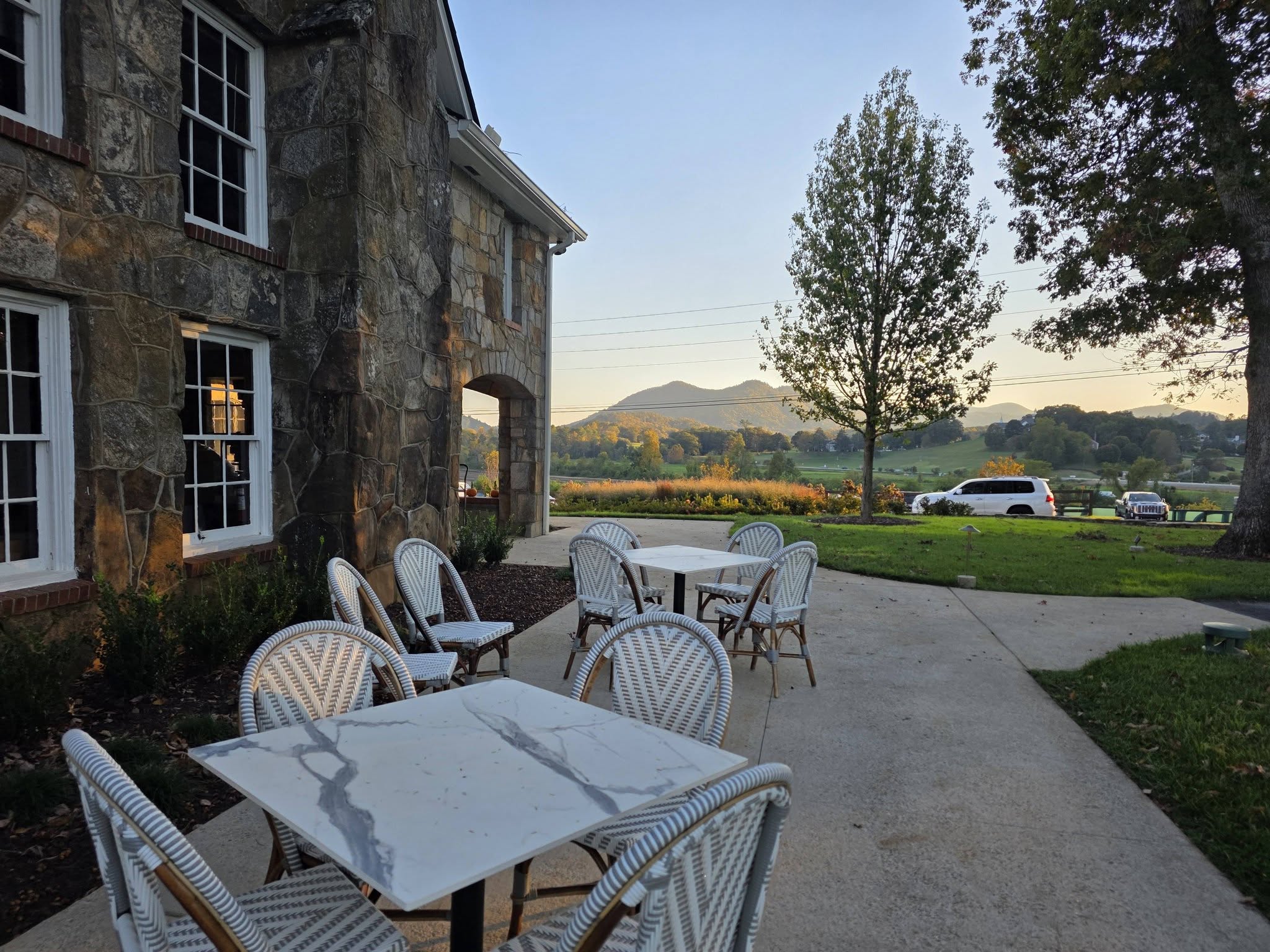
The festival spreads across downtown with events at Ciné, the Morton Theatre, Flicker Theatre & Bar, The Globe, Paloma Park, Live Wire Athens, and Creature Comforts. Most sit within an easy walk of one another, which changes the experience considerably. You actually move through Athens as you attend. A networking event ends, you step onto the sidewalk and join downtown again before walking a few minutes to a workshop.
A Festival That Belongs to Athens
Each venue lends something of its own personality.
At Ciné, just outside its walls, the red carpet stretches before a panel of scarlet flowers and metallic gold Athens Film Festival lettering. Gold stanchions frame the carpet as filmmakers and artists pose for photographs and offer interviews about their work. For an independent filmmaker, the evening offers a little well-earned Hollywood razzle-dazzle.
A few blocks away, The Globe provides an Old World theatrical intimacy, reminiscent of the playhouses from which it takes its name. A carved wooden sign hangs above the sidewalk, and upstairs, exposed pipes run beneath an old wooden ceiling while pendant lights cast amber pools over the room. Crimson curtains frame the windows near the projection screen, while chairs crowd together across the worn floorboards with tables and drinks mixed among them. The handsome wooden bar stretches along one side of the room, its shelves of bottles glowing beneath the warm light and lending the screening room the convivial air of an old European public house.

Here, the filmmakers stand only a few feet from the people who have just watched their work.
That closeness captures much of what I enjoy about the Athens Film Festival. It carries enough glamour to make attending feel like an occasion while preserving the accessibility that makes independent film interesting in the first place.
Like any good former hipster circa 2012, I took an interest in the Athens Film Festival before it was cool, or, more accurately, before its inaugural year.
I first encountered it during AthFest in June 2024, when downtown Athens had reached that particular degree of Georgia summer heat that makes standing outside for any extended period of time evidence of genuine commitment. There I met Allison Griffin, who was promoting a new film festival she and her husband, Chuck, were working to get off the ground. Its first screenings would arrive later that summer.
At the time, I had recently started a magazine of my own and was also in the process of organizing the Art & Artisan Festival at the Mill, among other events. I knew something about approaching people with an idea in hand and asking them to believe that, eventually, it might become something big.
Film already held a special fascination for me. I had worked behind the scenes with independent artists as a ghost writer and editor and had enjoyed a very background role around Atlanta’s movie world. I loved seeing the strange collection of skills and personalities required to move a story from someone’s head onto a screen. The prospect of seeing more of that culture develop in Athens thrilled me.
So I took Allison’s brochure, snapped a few photos, and posted an Instagram video that garnered an impressive 98 views, mostly comprising myself, my friends, and my mom.

Two years later, the festival has grown considerably from the event Allison promoted beneath a scorching June sun in 2024. She and Chuck, however, still appear to possess the unnerving ability to exist in several locations simultaneously. I saw the same hands-on involvement throughout the festival as I have in years past. Allison remains particularly difficult to miss, owing partly to a kick-ass Madeline tattoo that still earns a wink and a nod from me every time I see her.
My own ability to circulate proved somewhat less impressive.
I had intended to spend considerably more time at the festival this year, until a Lizzie McGuire-style fall left me with a bruised face, twisted glasses, and several other minor injuries and indignities for which I can assign responsibility to no one beyond myself. I reluctantly surrendered the remainder of my plans, making Friday night my sole evening of film watching this year.
Fortunately, Friday gave me plenty to think about.
Upstairs at The Globe
The Friday program at The Globe carried us through stories from remarkably different corners of the world, and somewhere during the evening, I began scribbling the same observation repeatedly into my notes.
The men from Western countries were remarkably passive.
Three films in particular caught my attention: If We Were Ants, Houston & Hazel, and Markmarta.
In If We Were Ants, actor and co-writer James Wood and director and co-writer Brennan Bruso explore young people caught in the uncertainty of early adulthood. In the film, the camera seems to share the lead male’s reluctance to confront things directly. Much of the film shoots its characters from unusually low angles, through windows, or from behind, with relatively few straightforward, face-to-face compositions. The perspective caught my attention because it visually echoes the protagonist’s passivity: we often seem to watch his life from the edges while he struggles to step fully into it.

Then, Houston & Hazel returned to a similar dynamic through dark comedy. A husband struggles with physical intimacy with his wife, and the couple’s frustrations eventually culminate in a scene as absurd as it is uncomfortable: he ends up on his knees with a dog biscuit in his mouth. The comedy pushes the situation toward the ridiculous while keeping the marital frustration underneath it recognizable.
By then, I had underlined the observation in my notes: Passivity is an unintentional theme.
Even Markmarta, the Russian entry, seemed to circle the same idea from a different direction. Its young pizza-delivery-driver protagonist becomes entangled with Marta, an older woman who carries a distinctly Mrs. Robinson-esque sexual confidence. She assumes the dominant role in their interactions while Mark largely responds to the circumstances she creates, giving the film another variation on the passive young man.
By the time the credits rolled, the repetition across three otherwise very different stories had become difficult for me to dismiss as coincidence. Yet the filmmakers had not coordinated around the theme, and I found little reason to believe the festival’s curators had intentionally cultivated it through their selections.

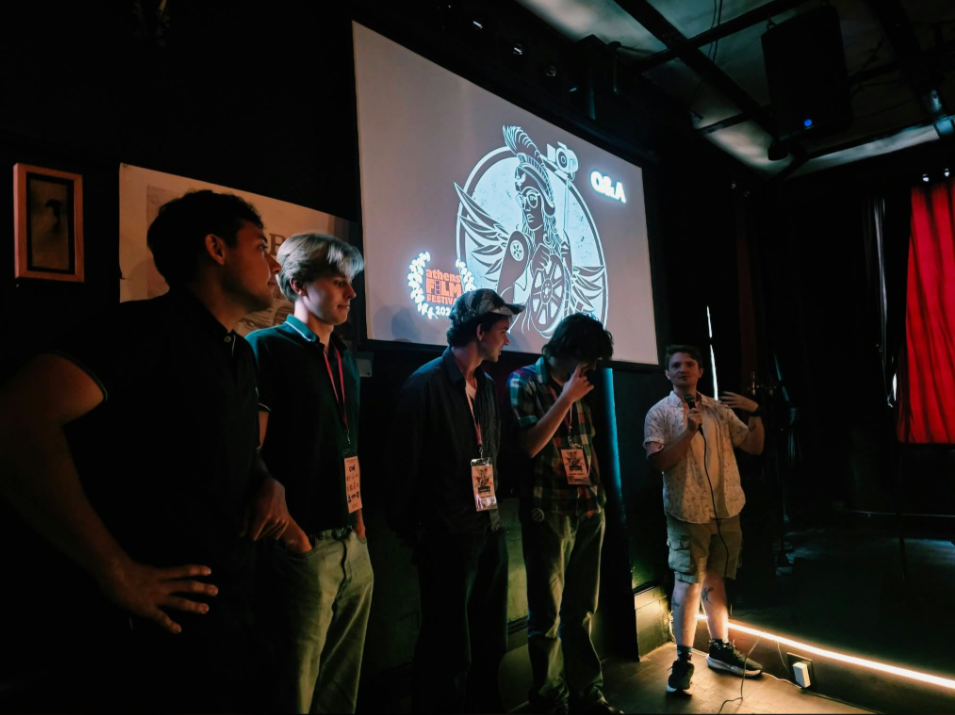
During a Q&A, I asked the teams behind If We Were Ants and Houston & Hazel about the passivity of their male characters, and their answers reflected something recognizable in a generation coming of age through screens and a firehose of choices. The Houston & Hazel filmmaker stated, “That was unintentional, which I guess answers your question that it is ingrained in the culture.” He explained that he had originally written the characters without assigning them genders, drawing pieces of himself into both.
The response from If We Were Ants made the pattern even more interesting. Its director connected the character’s passivity to his own experience at 19, newly out of high school and confronting the enormous question of what to do with the rest of his life. That feeling of having little control, he explained, could bleed into relationships, and they folded it into the film.
Yet the pattern became more notable when placed alongside films from Asia, the Middle East, and Eastern Europe screening around them.
Timeless Love follows Tibetan herdsman Gongpo Gyeltsen and his urban daughter Yangkyi as they confront a profound disagreement over life, death, and the tradition of sky burial. Their dispute places generations and understandings of mortality against one another. Both characters engage with the conflict directly.

The Iraqi film Noah transported the room to the dust-strewn fringes of a war-torn city, where children face gang violence in cemeteries with only nominal fear. Amid the sectarian violence, a 12-year-old boy sets out to bury his dog and fulfill a promise to his deceased father. I had written in my notes that a neighbor poisoned the dog. The child’s world demands decisions from him with consequences considerably greater than the relationship paralysis unfolding elsewhere on the screen.
The Ukrainian film The Last Screening carried its characters to the eve of Russia’s full-scale invasion, when a mysterious girl arrives at an old Kyiv movie theater, and the pair’s unfolding story plays alongside Casablanca on the screen, their relationship developing against a film already steeped in love, war, and the approach of history.
The male protagonist occupies a more ambiguous position in this pattern. Passivity does not quite define him, though assertiveness hardly does either, and his female counterpart supplies much of the energy that propels their relationship. The dynamic becomes especially interesting within a Ukrainian film, given the country’s culturally European identity and its long, beleaguered position beside Russia.

By the end of the program, the contrast had become difficult for me to ignore. Here were characters wrestling with burial rites and impending war, preceded by comparatively secure young Western men who appeared overwhelmed by the choices available to them.
These are the questions the Athens Film Festival invites its audience to carry from one screening into the next. Films made thousands of miles apart begin speaking to one another simply because someone watches them in succession, and themes their creators never intended to share suddenly invite comparison.
Perhaps that explains the number of people I met who had no professional connection to filmmaking at all. They came as moviegoers and connoisseurs of culture, eager to encounter stories they were unlikely to find at their local theater and then spend the evening talking about what they had seen. At an event built around an industry that can easily become insular, the presence of so many ordinary film appreciators gives the Athens Film Festival the atmosphere of a cultural gathering as much as a professional one.
A Question Answered
Back in the scorching summer of 2024, Allison Griffin handed me a brochure advertising a film festival that Athens had never hosted before. I saved it because I wanted to see where the idea went.
Two years later, I think I have my answer.
It went upstairs into pubs and beneath theater marquees, across red carpets and brewery courtyards, into conversations with sound editors and writers, and eventually onto screens scattered across a few blocks of downtown Athens. For a weekend, people who might never otherwise encounter one another sit together in the dark and look at the world through somebody else’s camera.
Then they walk back out into Athens and talk about what they saw.