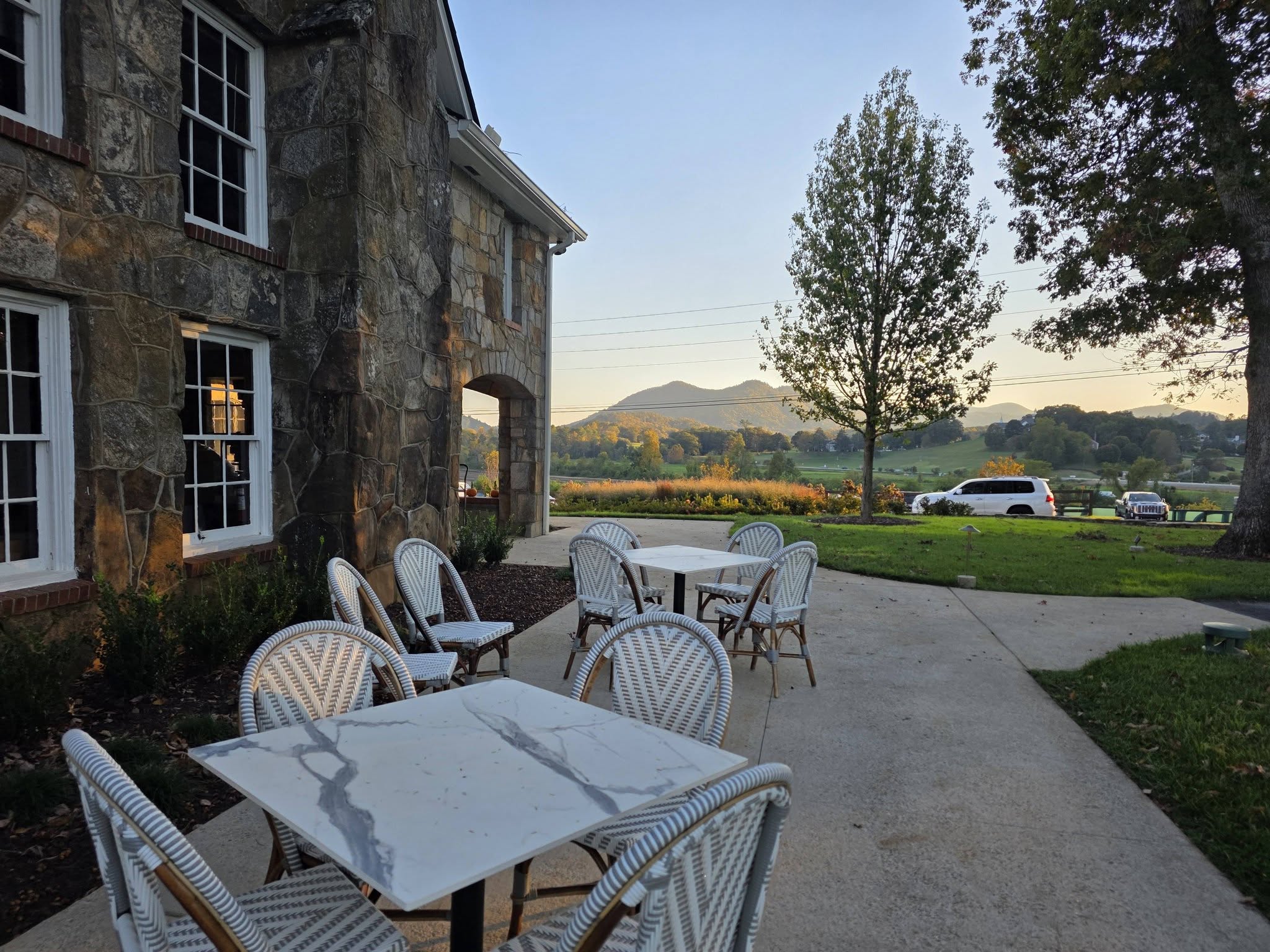
I met Cody over coffee at Christ Presbyterian Church on Roper Drive in Clarkesville.
We exchanged a few pleasantries while waiting at the coffee station before the morning service. She struck me as warm and approachable. After wishing one another a good morning, we headed into the sanctuary, where my family happened to find seats a few pews behind hers.

A few minutes later, the pastor invited the church’s visiting missionaries to come forward. To my surprise, the woman I’d met over cream and sugar stood up alongside her husband, Dillon.
The friendly stranger I’d chatted with moments earlier was preparing to tell the congregation that, within a matter of months, she and her husband would leave Northeast Georgia for Scotland. They were carrying the gospel back to the country that gave birth to Presbyterianism but where Christianity has steadily retreated from public life.
It is one of history’s ironies. In the 16th century, reformer John Knox helped establish Presbyterianism in Scotland, and for generations the nation sent missionaries around the world, including to America. Today, Scotland is among Europe’s most secular nations. More than half of Scots report having no religion. While 38.8 percent still identify as Christian, only about 5 percent attend church in a typical week, leaving many churches with aging congregations and empty pews. This fall, a young couple raised in the mountains of Northeast Georgia hopes to help write the next chapter of that story.

The destination awaiting them is a church called, Winchburgh Community Church, in Winchburgh, a town about ten miles west of Edinburgh that is changing almost as quickly as the skyline around it. Once a small mining community, Winchburgh has become one of Scotland’s fastest-growing towns as thousands of new homes rise from former farmland. New neighborhoods stand beside centuries-old stone buildings, while the Union Canal quietly cuts through the community before giving way to green pastures. Dillon explained that once you leave town, “it’s all farmland,” adding with a grin, “There’s more sheep than people.”
Despite its rapid growth, Dillon says the town’s spiritual landscape remains remarkably sparse.
“In the central belt of Scotland between Glasgow and Edinburgh, where the majority of the population lives, only one percent attend or claim to be evangelical Christians,” he explained. “In Winchburgh, being the fastest-growing community in Scotland, it’s sixty people that attend any church and only twenty people that attend a Bible-believing, gospel-preaching church.”

Those numbers naturally prompted the question that most people would ask.
“So what are you hoping to do to change that?”
Dillon answered without hesitation.
“We don’t have the power to change that.”
His response revealed something fundamental about the couple’s philosophy. They are not traveling overseas believing they will rescue Scotland. Instead, they hope to faithfully serve a local congregation while trusting God to accomplish the work only He can do.

Dillon describes their approach as the “ordinary means of grace.”
“It is real life,” he said. “We’re going to invite people into our home. We want to love on them. We’re going to meet them where they are. It’s just relationships.”
Rather than building their ministry around emotionally overwrought revival meetings or cry nights at church camp, the couple expects much of their work to happen around dinner tables, over coffee in cozy flats, at free church-sponsored festivals, and through everyday hospitality. They hope to equip church members to build genuine relationships with their neighbors, trusting that the gospel is often shared most naturally through lives lived alongside one another.
“It’s okay to have somebody in your house that doesn’t believe the same as you,” Dillon said. “You don’t have to shove the gospel down their throat until you have a relationship. Then the opportunity presents itself to share the gospel.”

That philosophy has already begun bearing fruit through the church plant they will join. During an Easter community event, organizers expected perhaps fifty children. Nearly three hundred came.
The volunteers became so busy welcoming families that no one even thought to take photographs.
Yet Dillon is careful not to exaggerate the moment.
“They were able to say, ‘Hey, we’re here. We exist,’” he said. “But with all that momentum, it’s not translating yet to church attendance.”
Part of his role will be helping shoulder responsibilities currently carried almost entirely by the church’s pastor. Dillon expects to preach, disciple members, develop leaders, and help strengthen the congregation until it can thrive independently.

“We’re trying to make a church plant healthy,” he said. “Then we’re trying to walk away and go plant another church.”
The work extends beyond Sunday mornings. Cody and Dillon’s children will attend local Scottish schools, giving the family natural opportunities to become part of the community. Friendships formed in classrooms, on playgrounds, and in local parks may prove just as significant as those formed inside the church building.
As they prepare for the move, the couple continues raising prayer and financial support. They estimate they are about 78 percent of the way toward their monthly funding goal, but Dillon insists prayer remains their greatest need.
“We’re not the saviors,” he said. “We already have one of those.”
He often returns to an illustration from missionary William Carey. One person climbs down into the well while another holds the rope. Neither can accomplish the task without the other.
“We believe there are goers and senders,” Dillon said. “The partnership side of holding the rope and going into the well requires both.”
When our conversation ended, I found myself thinking back to that ordinary exchange over the church coffee pot. Had I arrived a few minutes later, Cody would have been just another face in the congregation.
Instead, I met a couple preparing to leave behind the familiar mountains of their home for rolling Scottish farmland where, if Dillon is to be believed, the sheep may still have a slight edge over the people. More importantly, they are returning the gospel to a nation that once sent it across the Atlantic, trusting that the same ordinary conversations that began over a cup of coffee in Clarkesville can, by God’s grace, change lives in Scotland as well.
Learn how you can help, HERE. Moreover, please keep the Bennett family in your prayers.
Follow them on Facebook, HERE.