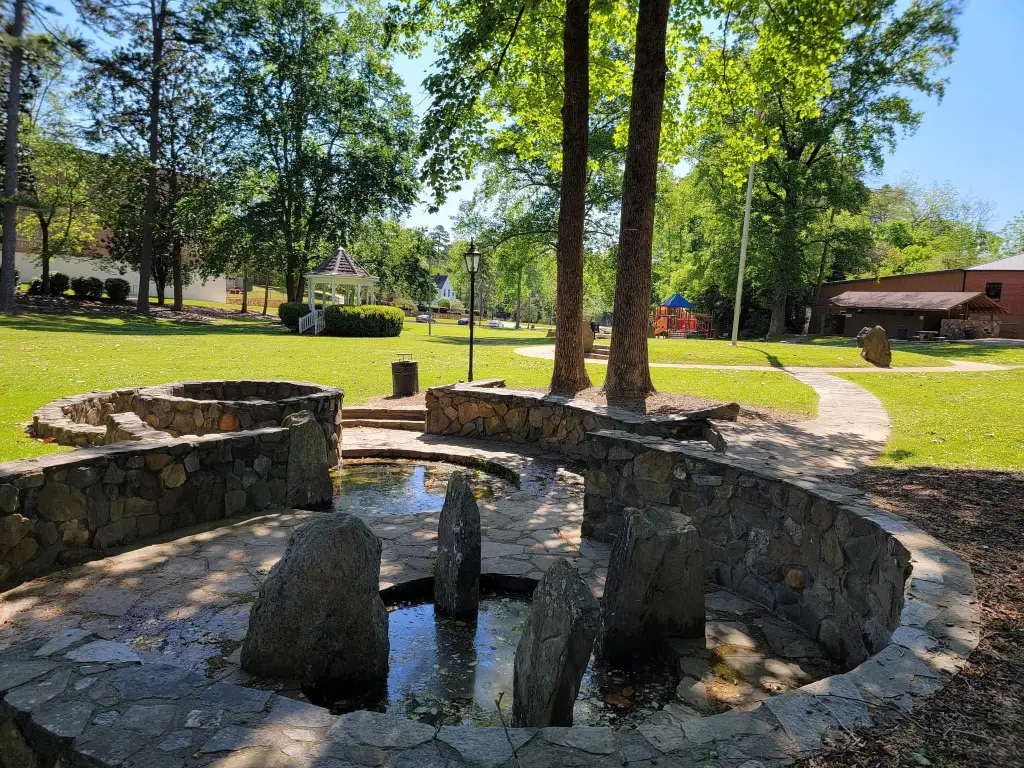
On my first day as a resident of Habersham County, I visited Demorest Springs Park. As I explored the area nestled between a coffee shop, Piedmont University, and Edwardian-era houses, I imagined bringing my children to play in the thick green grass and sun-dappled playground. However, I found myself puzzled by an unusual rock configuration that neither resembled a fountain nor a pool. While different people had different names for it, I initially dismissed it as a broken water feature littered with trash. It wasn’t until two years later that I discovered it was a natural spring with a storied past.

Long before Joseph Habersham and even the Cherokee claimed Habersham county, an ancient geological formation provided cool, safe water to local deer and the indigenous people of a time long forgotten. But what exactly is a natural spring? Put plainly, it’s a natural source of groundwater that emerges like a heavenly gift onto the Earth’s surface.This water originates from rainfall and seeps deep into the ground, where it’s filtered through layers of soil and rock. As it travels, it picks up minerals, resulting in the pure, refreshing taste that natural springs are known for.
But what makes natural spring water safe to drink? Unlike surface water, which is susceptible to pollution and contamination, spring water is protected by the layers of soil and rock it travels through. These natural filters remove impurities, resulting in water that is not only clean but also rich in essential minerals like calcium and magnesium.
In the Edwardian period of rural North Georgia, access to clean drinking water was a challenge faced by many communities. Without modern filtration systems and sanitation practices, waterborne diseases were a constant threat. In this context, natural springs like the one found in Springs Park played a vital role in ensuring public health and well-being. Families would flock to these springs to quench their thirst and fill their buckets with water free from harmful contaminants.

The founding of Springs Park in Demorest is a testament to the community’s dedication to preserving its natural heritage. Originally established in the late 19th and early 20th centuries, the park served as a gathering place for locals and visitors alike. A simple dipper left by the spring allowed people to drink freely, fostering a sense of camaraderie and novelty.
Over the years, Springs Park has undergone numerous transformations, reflecting the changing needs and priorities of the community. In the 1980’s, Facebook commentators wrote that residents added catfish and goldfish to the spring, and that these fish lived for years in the clean, fresh water. However, as time passed, the significance of the spring began to fade from memory. Today, many passersby mistake it for a defunct fountain, or in the words of one online commentator, “the creepy hole in the park” unaware of the rich history that lies beneath the surface.

As we reflect on the legacy of Springs Park, it’s clear that this natural wonder deserves greater recognition and appreciation. A memorial tablet detailing its historical significance would not only educate visitors, but also honor the generations of individuals who relied on its waters for survival. By preserving the memory of Springs Park, we ensure that future generations can continue to enjoy its pleasant features and quaint legacy.
Linked HERE is a petition that shows community interest in a memorial tablet.
Despite its hidden nature, Springs Park remains a cherished destination for those in the know. Tucked away amidst lush greenery and old growth trees, the spring continues to flow, providing a glimpse into a bygone era. As visitors pause to fill their cups from the cool, clear waters, they become part of a timeless tradition—one that connects them to the land and its history in a profound and meaningful way.