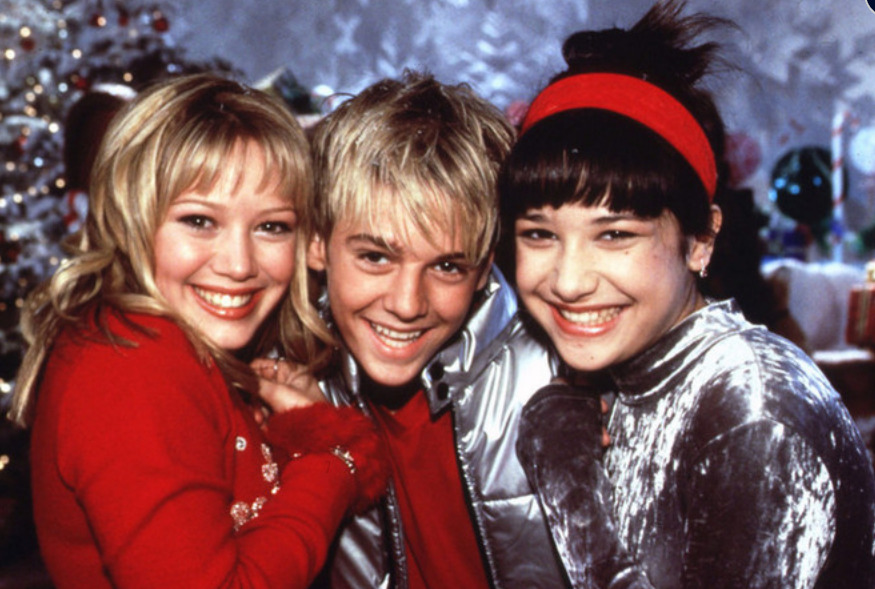
Only one true way to celebrate Christmas exists: the way one experienced it as a child.
This unwritten rule, universal and unyielding, feels as much a part of the holiday as the traditions themselves. Beneath the warm glow of my unabashedly colored Christmas lights and wrapped in a tie-dye blanket adorned with cats in Santa hats, I reflect on this sentiment while reading Jean Shepherd’s A Christmas Story.
In this novel, Shepherd rhapsodizes about a 1940s Christmas in an industrial Indiana town, where his family, perched on the edge of the middle class, crafts a holiday experience that resonates with countless Americans, evoking a small smile and the proverbial twinkle in the eye.
Christmas nostalgia transcends age and generation, serving as a bridge that connects us all. The shared memories of the holiday—and the contributions of grandparents, parents, and children—shape an ever-evolving yet steadfastly traditional concept of Christmas.
Each decade adds its own adornments to the season, much like the ornaments collected over time by families, carefully hung on the tree by overeager children who place them with pride, only for moms, clutching their coffee mugs, to swoop in and “correct” the placements—horrified that Ansleigh dared to hang a bauble on a branch without a sufficient gap.
Reading A Christmas Story, a staple of Americana, helps me understand why TikTok and Instagram overflow with warm remembrances of Christmas in the early 2000s. It captures the essence of Christmas as a child and how our hearts long for those days, even as we recreate them with little twists for our own children.
The Decor
In 2000, an era dominated by chunky jewelry, platform wedges, and flared jeans, the only thing flat was our hair. The same aesthetic extended to holiday decor, where Christmas trees and fireplace mantels showcased oversized ornaments spray-painted in shimmering gold, royal blue, or cardinal red, nestled against faux garlands. The bolder the better.
The goal with color was never to blind your visitors, but certainly to stun them—or at the very least, make their eyes water. This meant embracing newfangled contraptions like LED Christmas lights to illuminate our bushes, frame the garage, and festoon every possible surface both inside and out. If your house did not look like it was being raided by the FBI you were essentially nobody in your town.
Yet, no yard was complete without a leering inflatable snowman and at minimum two light-up reindeer, which, at least once a year, would be rearranged by some mischievous neighborhood kid into a pose that was, to say the least, unbecoming—much to the delight of passing children on their way to school, who would giggle at what they deemed the height of holiday humor.
However, the sprig of holly on the figgy pudding of Christmas decor was the Santa Claus hat placed by a dad on the mounted singing bass, an action always accompanied by a self-indulgent chuckle.
The Parties
The difference between a Y2K Christmas party for kids and adults was minimal at best. Both featured the same Christmas character-shaped paper plates, festive plastic tablecloths, and the same spread of carrot sticks, Pillsbury reindeer mini cookies, and cupcakes with or without rings in them.
The soundtrack between adults and youth at Christmas held little variety either, with classics like All I Want for Christmas Is You by Mariah Carey playing in the background—or, to the dismay of dads everywhere and the sappy pleasure misty-eyed moms, Christmas Shoes. If you asked Debra which was sadder, the Christmas Truce of WWI in 1914 or the song about the dying mom and the shoes, we all know which one she’d choose.
For children, these parties often featured a craft where they would glue two candy canes together to create a reindeer face, using foam sheets for antlers and a pom-pom for a nose. For adult women, the festivities usually involved cheap jewelry sold at inflated prices from MLMs or Pampered Chef. Yet all parties included the obligatory white elephant exchange. This was typically filled with early aughts gifts like rhinestone covered photo frames, scented cucumber melon candles, or novelty mugs with vaguely humorous sayings like “Don’t Talk to Me Until I’ve Had My Coffee.”
Gifts
The early 2000s marked a golden age for the “gag gift,” with options like the “Nothing Box,” singing bass, underwear emblazoned with vulgar phrases, singing neckties, and I’m With Stupid T-shirts. Dads, in particular, endured the brunt of these cringe worthy presents, poor souls. Moms, on the other hand, received soap packaged in fake champagne bottles, spa gift baskets filled with cheap toiletries, plastic rhinestone earrings, and, of course, more scented candles.
Gifts of higher caliber included Tupperware sets—often regifted after a friend fell prey to an MLM pitch—subscriptions to magazines like Southern Living or Better Homes and Gardens, T-shirts celebrating motherhood, cookbooks aimed at elevating the family casseroles, and self-help books focused on slimming down and increasing wealth. Grandparents received photo calendars and mugs featuring their dogs and grandkids—photos captured by the lucky dad who got a digital camera, and the mom who developed the images.
Can we just take a brief moment to appreciate Amazon and Etsy for the revolution they’ve brought to gift-giving? I still kind of want that digital camera though.
Activities on the Day of Christmas
The day itself began at 6:00 A.M. No self-respecting kid allowed the sun to rise without them, and few parents missed the chance to wake them with blaring Christmas music. It wasn’t uncommon to meet in the hallway amid a great clatter of excitement, eagerly trooping to the tree, which glowed warmly, casting its light over the glittering presents. Meanwhile, mom and dad settled on the couch, and the oldest child in the room proudly played the role of Santa Claus.
The day brimmed with holiday traditions that have since evolved into fixtures of our own Christmas season. Kids gathered to watch the live-action The Grinch or the Rugrats Chanukah Special, but it was A Christmas Story that took center stage. The film played on an endless loop on TBS in the living room, allowing family members to catch snippets between holiday activities and meals.
While artificial Christmas trees had become more common, families still made the trip to tree lots, carefully selecting the perfect evergreen to stand proudly by the hearth. The scent of pine filled the air as children stuffed discarded wrapping paper into bags, the tangible remnants of a holiday morning well spent.
Christmas Today
Several Christmas trends have risen and fallen like the tides of empires since the early 2000s.
There was the white light trend, where people in gated communities held fast to their belief that white lights were the ultimate in holiday elegance, while those who favored color were seen as lesser by the “fancy” crowd. Then came the era of the sad beige Christmas, a subdued and minimalist approach that felt like UPS broke into your home and set up shop with its cardboard boxes.
Now, I’ve noticed a resurgence of nostalgia for a Christmas bursting with color—candy cane ornaments, snowman inflatables, and, of course, the reigning supremacy of Mariah Carey’s All I Want for Christmas Is You on Spotify playlists. Some new trends, like the Grinch mania, will likely stick around, but ultimately, we can’t forsake the Christmases of our fathers and grandfathers. And so, to quote Tiny Tim, “God bless us, everyone!”